Case Study — 06
Front- and Back-Office CRM
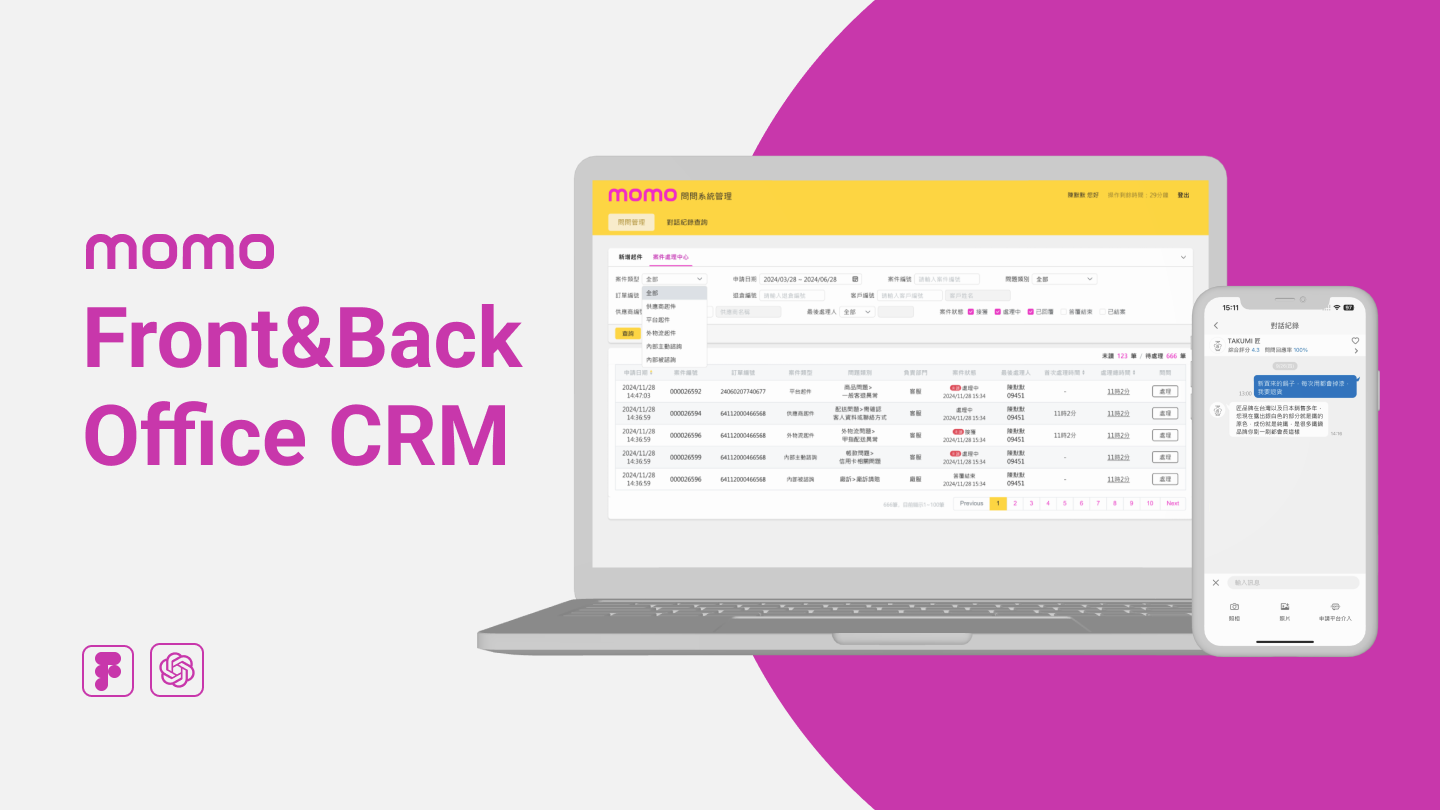
momo 問問 is about getting the three sides of a marketplace — platform, stores, and shoppers — talking to each other. At the time, momo was shifting from a pure 2C retailer toward a 2B2C marketplace and opening up to third-party stores. I designed the shopper-facing chat, 問問, and the customer-service back office that keeps those conversations moving, disputes included.
01 — Challenge
Three Sides, One Conversation
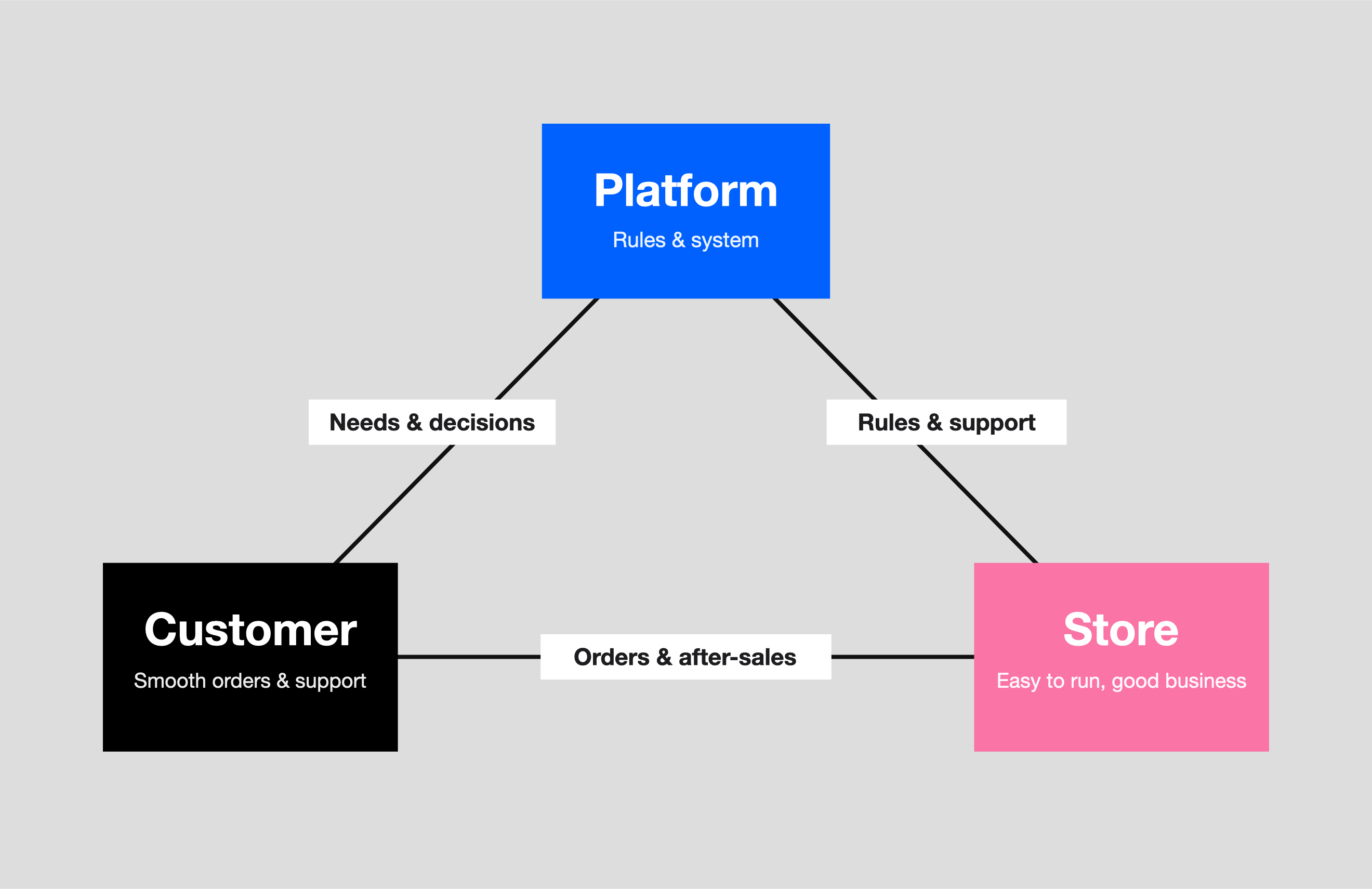
The moment stores came onboard, three groups with very different goals had to work together. The platform needed to set the rules and build the system. Stores wanted it easy to run their business. Shoppers just wanted a smooth purchase and someone to turn to afterwards. My job was to keep the communication between them from breaking down.
02 — Design
Questions, Handled in Chat
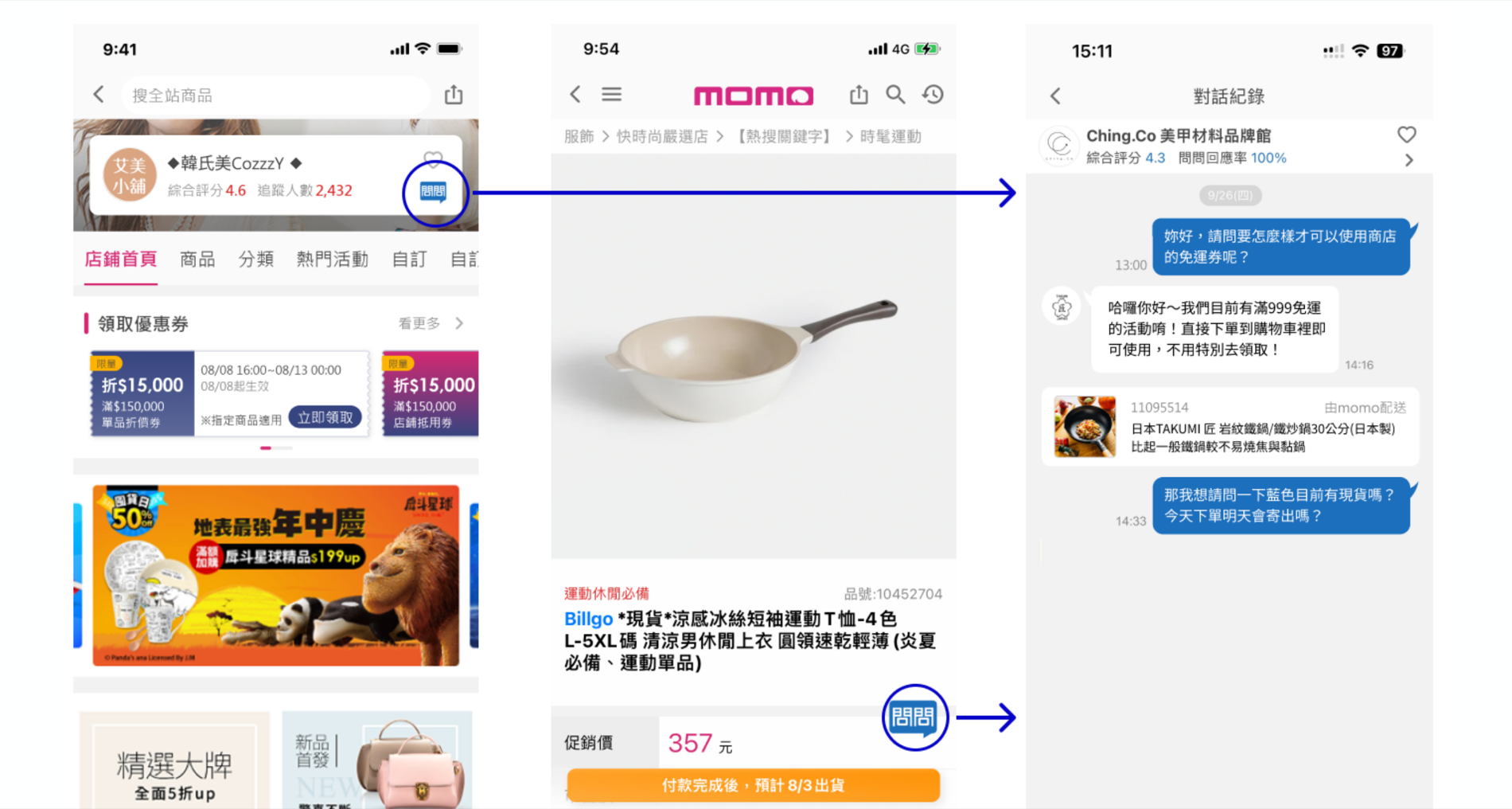
How should shoppers and stores actually talk? I went with the format everyone already knows: a chat thread, 問問. It sits right on the store page and the product page, so a question can happen on the spot, without anyone having to leave what they were looking at.
03 — Process
When a Deal Goes Wrong
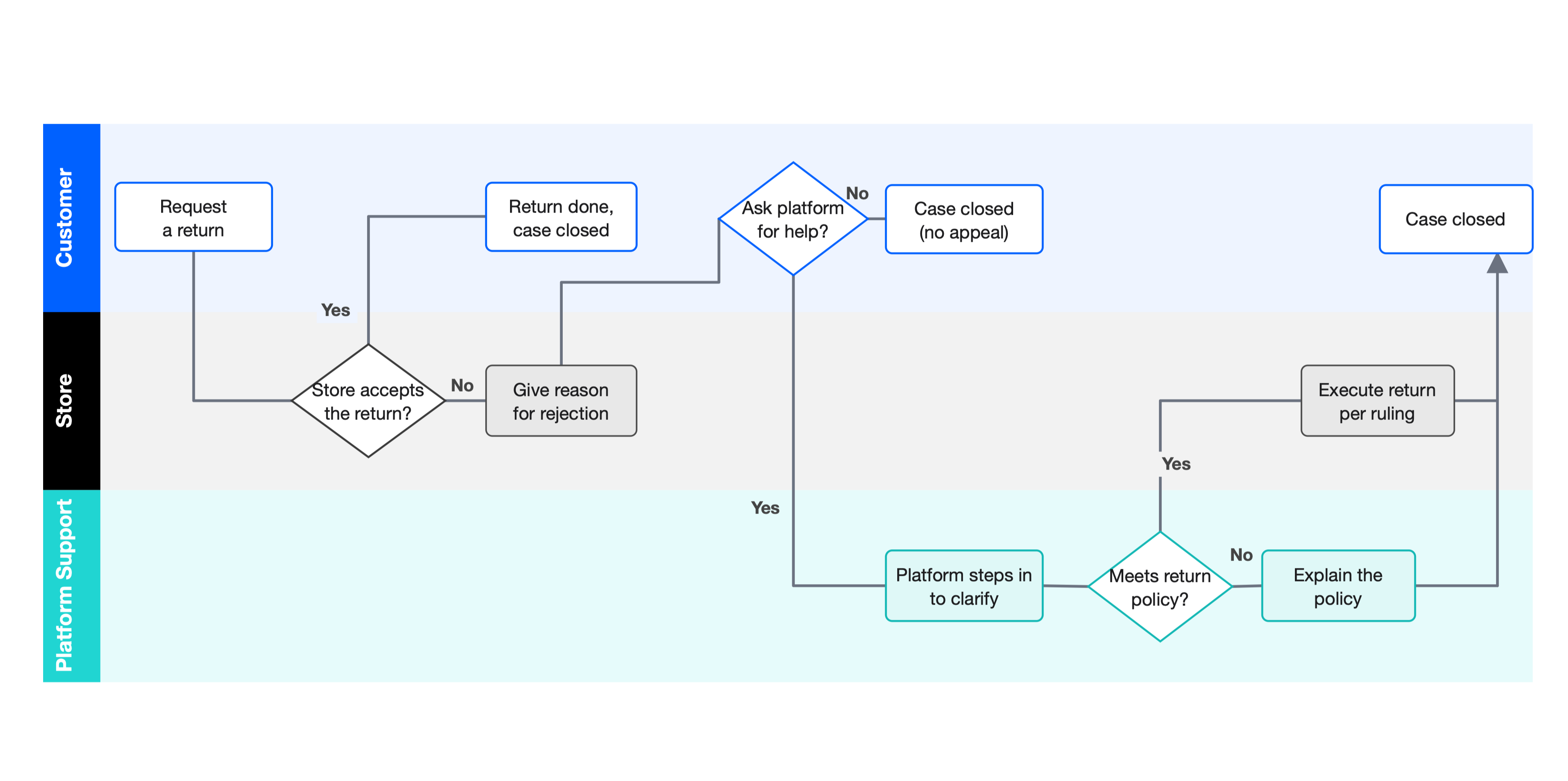
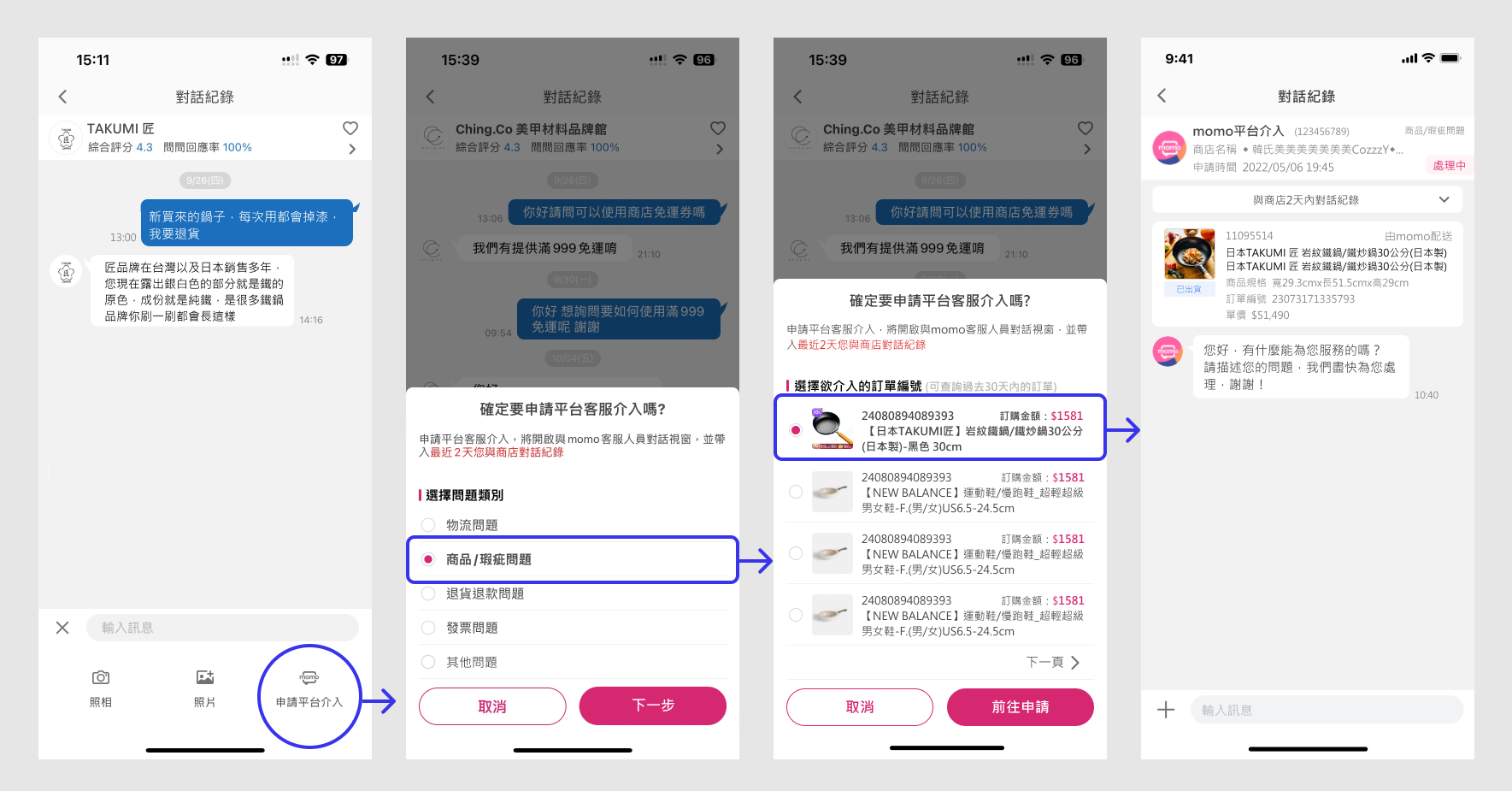
But not every order wraps up smoothly. For the ones that turn into disputes, I laid out the whole platform-intervention flow across the customer, the store, and platform support, so each step is clear: who acts next, and at what point the platform comes in to mediate.
04 — A Judgment Call
How Visible Should "Ask the Platform" Be?
This was a genuinely tricky trade-off. Operations wanted the platform-intervention entry to be obvious, so people could find it when they really needed it; customer service worried that if it were too obvious, every little thing would get dumped on the platform. So my job became convincing the stakeholders of a two-part answer: a gating mechanism that only lets a case reach platform intervention when there's a real order problem, plus a compromise on the UI — the entry lives inside the "+" menu, findable when you need it but not something you notice day to day.
05 — The Back Office
A Back Office That Felt Familiar
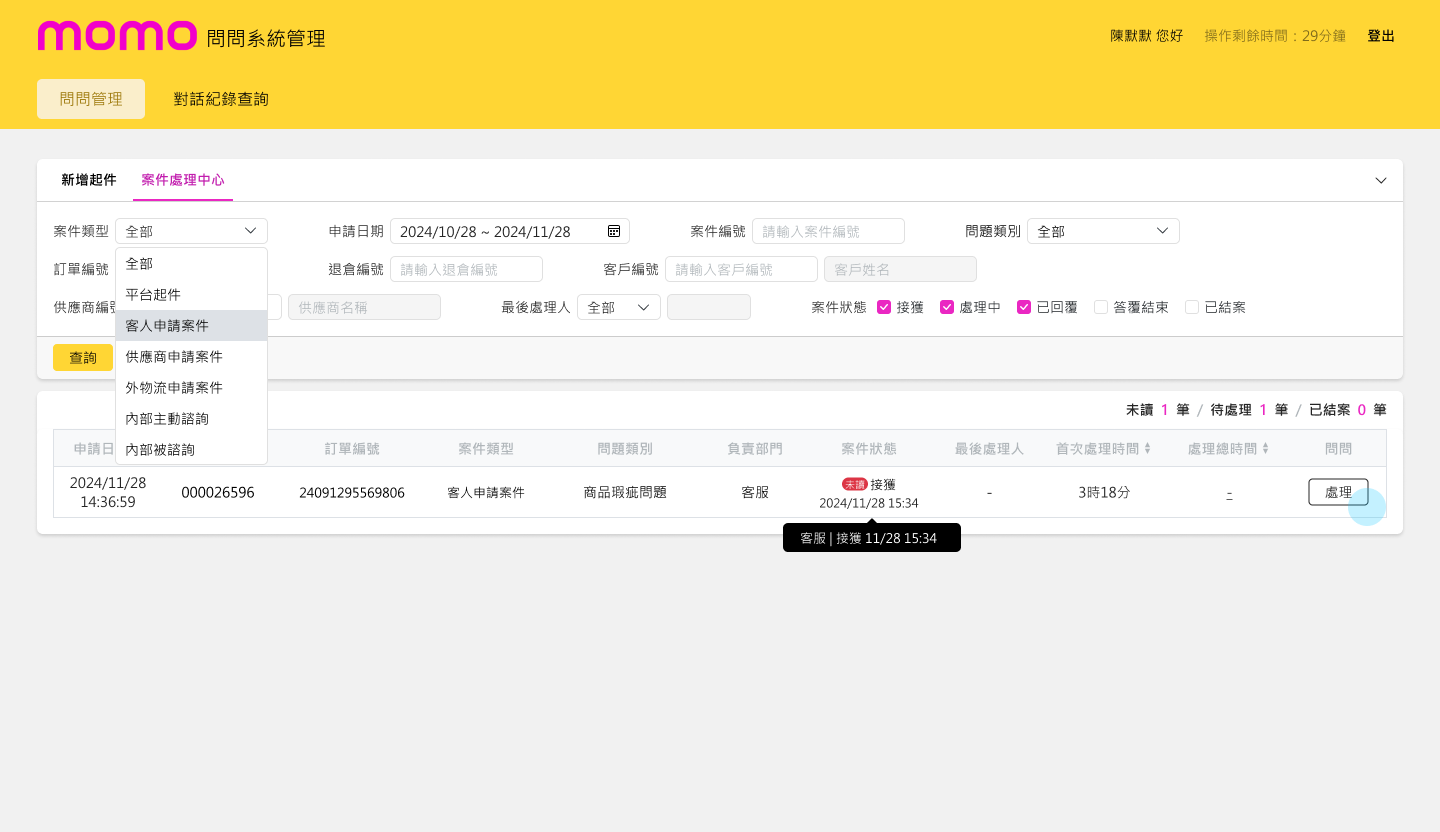
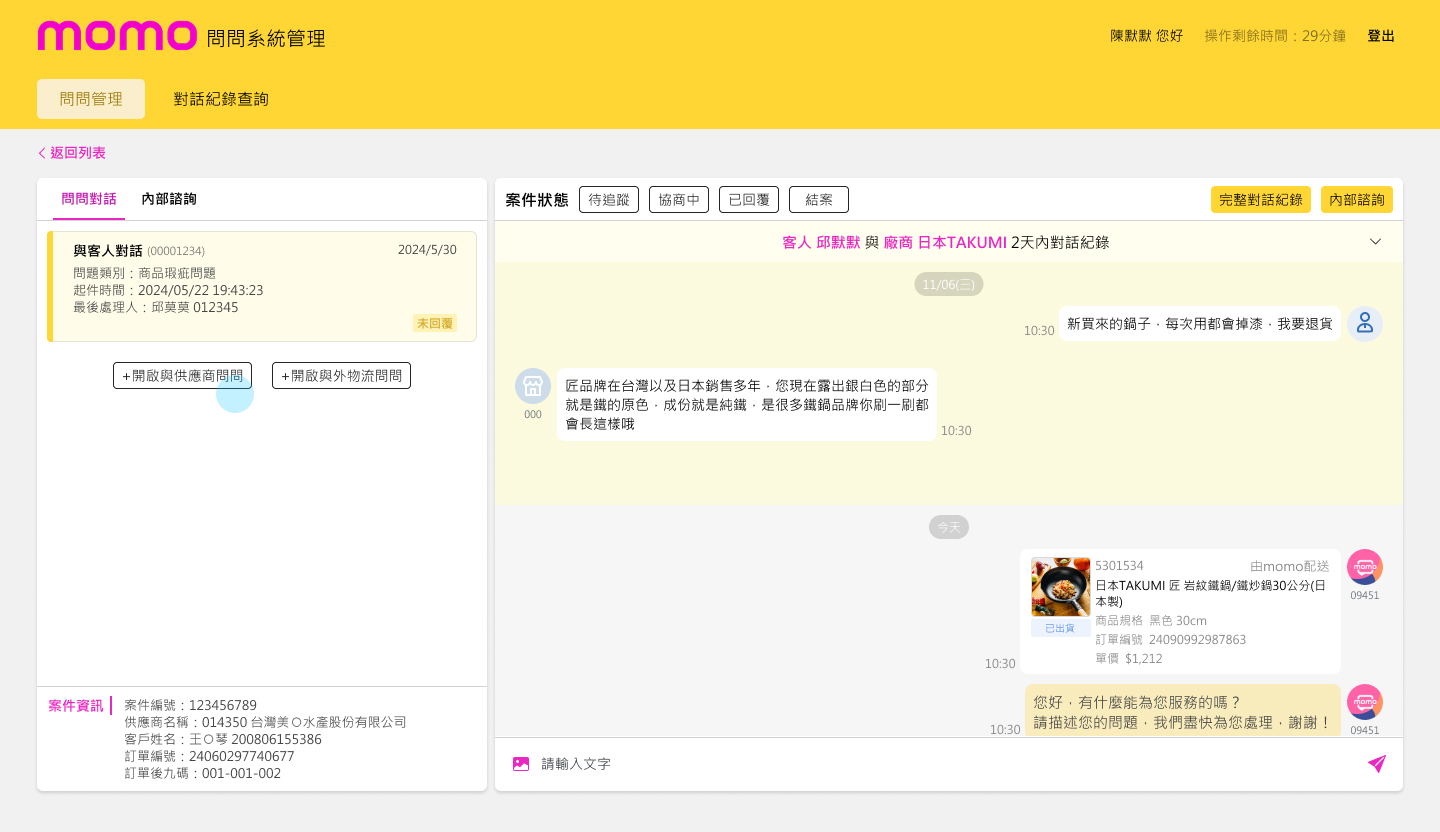
This is the CRM the customer-service team works in. I re-planned the interface from user interviews and usability testing, keeping it close to the way they already worked so there was nothing new to learn. Each case is handled as a chat thread, with the relevant order details pulled in automatically, so the work feels more intuitive and takes less time.
06 — Impact
Adopted as the Foundation
In the end, the structure was adopted by the team, and became the base that later features were built on.